Ithaca Fishing Day - 17th Annual
This Saturday - March 14
Ithaca Fishing Day is an event the Chapter (Leon Chandler, #239) hosts on an annual basis. This year, it is being held on Saturday, March 14th from 9 AM to 3 PM at Boynton Middle School in Ithaca, NY. While the event is a major fundraiser for the chapter, it also uses it as an opportunity to inform & educate the community about Trout Unlimited, who we are, what we do, and why we do it.
In addition, speakers will present on relevant information about fishing and/or conservation-related topics, fly-tying demonstrations (hosted this year by Twin-Tiers Five Rivers Chapter of FFF), a casting clinic offered by Joe Cambridge and Carol Farkas, and numerous vendors (Badger Creek Fly Tying, Mad River Fly Tying, etc.). This is a major event for the Leon Chandler Chapter, and with the support they received this year, the only thing we need to make it a huge success is people and friends.It is time we all come to the aid of our fraternal chapters in NY TU when possible.
Ithaca Fishing Days
SATURDAY, MARCH 14, 2009; 9 A.M. TO 3 P.M.
BOYNTON MIDDLE SCHOOL CAFETERIA
Route 13 North by Cayuga Lake
Sponsored by: The Leon Chandler Chapter of Trout Unlimited
Admission and Programs Free - Donations Appreciated
FEATURING
FREE continuous fly tying instruction by TU youth educators!
FREE continuous fly casting instruction by noted local instructors Joe Cambridge and Carol Farkas (beginning at 11:00 am)
Complete line of fly fishing materials and equipment for sale
Fishing, Community Education and Environmental Exhibits
Fish tanks of local insect species
Fly fishing discussions and lectures
VENDORS and EXHIBITORS Including
Mad River Fly Tying,
Badger Creek Fly Tying,
JW Trout,
Floating Classroom Project
and more . . .
08 March 2009


05 March 2009


04 March 2009
 Just in case anyone wants to get warmed up for tomorrow's frog dissection..... have at it!
Also, tomorrow at 8:20am we will have a live video streaming of the frog dissection!
03 March 2009
Here is a list of current events relevant to what we have studied so far this year...
New fish species - the Frogfish
Another animal on the cusp of extinction
Fossilized human footprint
Antibiotic Resistance in children
Charles Darwin and evolution
New fish species - the Frogfish
Another animal on the cusp of extinction
Fossilized human footprint
Antibiotic Resistance in children
Charles Darwin and evolution
28 February 2009
 Saturday the Sisterhood of Science traveled to Cornell's Duffield Hall to take part in several hands-on activites dealing with groundwater. Water as a resource will be a huge issue in the next 10-15 years. It's just hard for us to see here in the Northeast where we receive a modest annual rainfall.
 Here, Cassie and Gabby try to figure out which wells were contaminated in a simulated town.
 The girls studied porosity of different soil types ranging from clay to gravel.
 Now that's teamwork! Thank you to the Cornell Nanobiotechnology Center for organizing and arranging these opportunities for us.
26 February 2009
*WILKINS BIRD LECTURE* - Tonight!
"The Second Atlas of Breeding Birds in New York: 20 years of change."
Speaker: Kevin McGowan of the Cornell Lab of Ornithology
SUNY Cortland Sperry Hall Rm 106
Extra Credit for those that come!
Informal reception starting at 7:00 p.m. with talk to follow, 7:15–8:15 p.m. --Kevin J. McGowan received his B.S. and M.S. degrees in Zoology from the Ohio State University and a Ph.D. in Biology from the University of South Florida, where he studied the social development of Florida Scrub-Jays. He came to Cornell University in 1988 as curator of the Ornithology and Mammalogy collections in the Department of Ecology & Evolutionary Biology. He moved to the Cornell Lab of Ornithology in 2001. He helped create the All About Birds web site and wrote the Bird Guide section. He just finished co-editing and writing much of the recently published book, The Second Atlas of Breeding Birds in New York State. He is currently the coordinator for the Lab's Home Study Course in Bird Biology. He has been studying the biology and social behavior of crows around Ithaca, NY for over 20 years.
"The Second Atlas of Breeding Birds in New York: 20 years of change."
Speaker: Kevin McGowan of the Cornell Lab of Ornithology
SUNY Cortland Sperry Hall Rm 106
Extra Credit for those that come!
Informal reception starting at 7:00 p.m. with talk to follow, 7:15–8:15 p.m. --Kevin J. McGowan received his B.S. and M.S. degrees in Zoology from the Ohio State University and a Ph.D. in Biology from the University of South Florida, where he studied the social development of Florida Scrub-Jays. He came to Cornell University in 1988 as curator of the Ornithology and Mammalogy collections in the Department of Ecology & Evolutionary Biology. He moved to the Cornell Lab of Ornithology in 2001. He helped create the All About Birds web site and wrote the Bird Guide section. He just finished co-editing and writing much of the recently published book, The Second Atlas of Breeding Birds in New York State. He is currently the coordinator for the Lab's Home Study Course in Bird Biology. He has been studying the biology and social behavior of crows around Ithaca, NY for over 20 years.
25 February 2009


Today we had our first animal dissection of the year: the Lubber Grasshopper. The following websites will be helpful in better understanding the dissection.
Virtual Dissection
Good site on grasshoppers
Wiki's entry
Here is video from 5th period:
23 February 2009
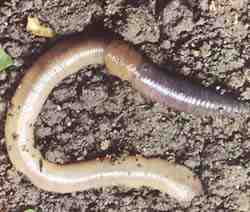

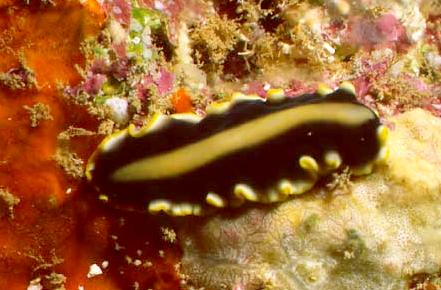 Phylum Platyhelminthes
Posted By: SHELBY F.
Period 5
Characteristics:
*unsegmented organism
* have three different germ layers
*can reproduce asexually and sexually
* They are controlled by "Flame Cells".
* Bilateral symmetry
*Most are monoecious
* Have oblique layers of muscle
*lack a respiratory or circulatory system


13 February 2009
12 February 2009
 Today was a great day in the lab as we looked at hydras and flatworms. It took us all day but we finally found a hydra that was producing an asexual bud. This one was about to break off and we had to poke it so it would mostly fit within the field of view. Below is an example of the planaria that we observed today.
11 February 2009
 Happy Darwin Week!
Today's class was devoted to Charles Darwin's 200th birthday and the 150th anniversary of the publication of his "Origin of Species", a book that sent a tidal wave through the human understanding of how life fits together on this marvelous planet. We have to give Darwin enormous credit for standing up to popular misconceptions of his time due to the extreme pressure to do otherwise. Here are a couple great resources to learn more about Darwin and his theory of Natural Selection to explain how evolution works.
Great videos from PBS's series on evolution.
Evolution 101
Tree of Life Project
Happy Birthday Chuck!
10 February 2009

Hi everyone. I have created a separate blog to document the 2,175 mile journey for the Groton Appalachian Trail Project. I officially start 3 April 2009. At that time this blog will automatically redirect to this site. In the meantime, I will update both. Please check the designated site for information regarding planning and preparing for the long trek.
06 February 2009

 8th grader, Brenna H. brought in quite the find today...a 30cm (12") monster salamander. I had an idea what it was but wanted to contact the professionals. Here is what Dr. Peter Ducey from SUNY Cortland had to say:
Yes, you are correct that this is an adult mudpuppy (Necturus maculosus), a fully aquatic salamander found in many of the large lakes and river systems in this part of the country. They have been reported to be active all year, including under the ice, and are sometimes caught by people while fishing.
Subscribe to:
Posts (Atom)