29 October 2009

Guest Speaker

Over the next couple weeks we will have several Cornell students in to
present a variety of topics. Today, Rick Cicciarelli was here to give
us a great lesson on honey bees. He even brought in a sample colony
for us to see. Very cool!

28 October 2009

I occasionally read a great blog by a guy out of Cornell. He usually posts about birds and salamanders but this cool photo caught my eye. Can anyone hypothesize what happened to this beetle? Many times in science, we're not around to observe what took place but can look at the evidence and test our best guesses through a variety of ways. Any guesses about this one?

Quiz Friday on microscope parts and safety! Here are a couple things from the interweb that I've gathered to help you study for the quiz. Remember, the quiz is on microscope parts and their functions and also safety. Here are a couple good sites:

Labeled Microscope

Quiz Yourself

Lots of information about what we covered this week.

27 October 2009


Today we rotated among 4 stations all dealing with microscopes. Here, Mr. Rhoads and Mr. Meade work on preparing wet-mounts and focusing with the microscope. We learned that a letter "e" appears upside down and backwards because of the lenses and mirrors within the bodytube. Friday we have a quiz on microscope parts and safety. Make sure you study!

26 October 2009

Greetings from your new student teacher!! I am very excited to get started with microscopes this week. I already know nearly all of your names, and look forward to getting to know and Mr. DeVoe. As you can see by my picture I have been to far corners of the world to study Biology and hope to share some experiences with you all. See you in class!

23 October 2009

The following students earned perfect scores on their taxonomy quiz: Annelise H., Tristen B., Mackenzie C., and Sam G. Way to go! We will go over these on Monday. Next week we welcome Mr. Meade as our student teacher who will be joining us until the end of December. Please make him feel welcome at Groton.
Yesterday Viola's Helping Hands helped out with the school garden. We ripped out all of the weeds and leftovers from this year's crops. Thanks again to 7th graders SAM N., ALEXIS S., KEIGHTLY M., CHAD D., and ANNA L. for being part of this along with several 6th and 8th graders. Here are a few photos:


After I roto-tilled everything up, we planted a couple rows of garlic that will pop up in the spring.

20 October 2009


Thursday after school I will be helping Viola and the middle school helping hands clean out the veggie garden for the year. We'll be pulling out the remains of this year's crop, adding compost, and roto-tilling everything up. If you'd like to help out stop by room 302 after school or join us at the garden across the street from the school.

19 October 2009

The issue of drilling for natural gas is a hot topic here in Central New York. The "pros" of this issue include getting fuel from local sources instead of the middle east but the "cons" include major threats to our groundwater supplies. More info can be read here and here. If this is a topic you're interested in you can use the letter below and copy/paste it to Pete Grannis at petegrannis@gw.dec.state.ny.us or pop it in the mail to the address indicated.
.................................................................................................

October ____, 2009

Commissioner Pete Grannis
Department of Environmental Conservation
625 Broadway
Albany, NY 12233-1011

Re: Draft Supplemental Generic Environmental Impact Statement
Gas Drilling in the Marcellus Shale and other like Formations


Dear Governor Paterson and Commissioner Grannis:

As a sportsman and conservationist, I am concerned about Hydraulic Fracturing and Natural Gas Development in New York State; and the potential negative impacts to water quality and supply. To this end, I write to you today requesting a minimum 90 day comment period and at least seven regional public hearings on the "Draft Supplemental Generic Environmental Impact Statement for gas drilling in the Marcellus Shale and other like formations" that the Department of Environmental Conservation has released (DEC). As you know, the Final DSGEIS will largely determine the regulatory regime under which permits would be issued for gas drilling in the Marcellus Shale.
As an angler in the northeast, I could be directly affected by gas drilling and high-volume hydraulic fracturing. I am deeply concerned about the potential natural resource and recreational impacts from those processes. Further, the technical and environmental issues associated with this proposed industrial activity are complex and extensive; and citizens should be given more time to interpret and digest the contents of the DSGEIS.
I hope that the DEC will provide for a 90 day comment period but more preferably 6 months and hold at least seven regional public hearings that are convenient and accessible to interested parties, including at least one hearing in New York City.
Thank you.

Very truly yours,

Your Name

14 October 2009


In class we've been studying taxonomy - the system by which life scientists classify, or group, living things. Today we grouped Teddy Grahams by similarities and differences.

As we learned, all life on the planet used to be grouped as either a plant or an animal. However, as we learned more about science and especially since the technology to analyze DNA has come about, we have had to change a lot of how we grouped living things. Modern taxonomy is based on DNA similarities and evolutionary relationships. In addition to grouping living things, scientists also try to fit together extinct species into the "tree of life". There was a major find today in the news that illustrates this. The news story is found here.

07 October 2009

The following students got a perfect score on today's vocabulary quiz: Camille, Savanah, Sam G, Brandon, Courtney, Kelly, Sam N, Curtis, Zach, Tim, Chloee, Mackenzie, Amber, Alan, and Anneleise. Nice job guys. Remember, tomorrow is the last day of the 5 weeks so get those old assignments in!

02 October 2009


Today we set up our vermicomposting bin (composting food scraps with the help of worms called Red Wigglers). We created a moist environment with plenty of shredded newspaper and put in some leftover salad, old squash, and an apple core. These guys love to eat so we will be adding food scraps 3 or 4 times a week. In return we will get rich fertilizer called worm castings.

01 October 2009

Today's graphing activity centered around graphing the phase changes of water. Here, members of 1st period record temperature data each minute.
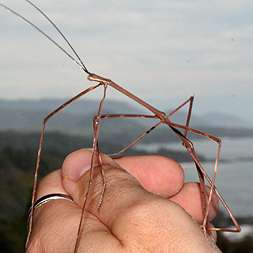
Remember, Insectapalooza is this Saturday at Cornell. If you go, please bring something back so I can give you extra credit for attending. Remember to carpool!

28 September 2009

Last year, Google's Project 10^100 invited the world to submit ideas to help as many people as possible. They received over 154,000 submissions, which they narrowed down to their favorites.

Now, you're invited to view the ideas and vote for the ones you think will help the most people.

They will use your votes to identify the best ideas for further consideration, and they've committed $10 million to make up to 5 of them happen.

Hurry, voting ends October 8, 2009.

Check out the great ideas here and be sure to vote for your favorite.

27 September 2009

*The Bizarre & Wonderful World of Insects!*

Cornell University’s Department of Entomology will host “Insectapalooza
2009” on Saturday, October 3 from 9:00 AM to 3:00 PM in Comstock Hall on
the Cornell campus. Come visit the legendary Arthropod Zoo and this
year’s Live Butterfly House. Tour through the world famous Cornell
Insect Collection and see samples of more than 5,000,000 preserved
specimens. Learn about mutations in insects, how insects impact human
and animal health, invasive species, genetically modified organisms and
biological control. Meet the Entomology faculty, students and staff who
study insects in order to find better ways to protect our food, health
and biodiversity. This is a fun event for all ages and there is no cost
for admission.

25 September 2009

This year in 7th grade we will be sponsoring a less fortunate child from Africa. Today we watched "The Miniature Earth" to get a better idea of the hardships many people in the world face. The clip we watched in class is located here: http://www.miniature-earth.com/me_english.htm

Remember, if you are interested in helping out you can leave your loose change in the container in Mr. DeVoe's room. If ever 7th grader chips in 30 cents a month we can make a huge difference in a child's life and give them basic health care, access to clean water and food, and education.

Click here for more information on Zambia.

24 September 2009

In class today we watched the amazing film, "Cosmic Voyage". 2nd period had some interuptions with pictures being taken so here is the full-length video in case anyone wants to see the segments they missed:

22 September 2009

My highschool class is currently studying forestry. Today we cut up some "beaver cookies" to study tree rings. We started out the old-fashioned way but soon had to revert to the chainsaw to finish up. Above, Mr. Stegeland and Donovan give it a shot while Jesse looks on. Thanks to Groton resident, Mr. Billups, for donating the Norway Spruce log. Here is a short video:

21 September 2009

Today we reviewed metric measurement and collected the slug lab write-ups. We will be having a test Wednesday on measurement and the scientific method. Please stop by if you need help with anything. Tomorrow in class we will review for the test.